

is that recruiter real?
A 2026 field guide to job scams, and why the old rules stopped working, especially in AI hiring.

The End of “Seeing Is Believing”
We’re hiring at Careerflow right now, which means I spend part of my week reading applications. Some of the people applying to us are not people.
They’re operators using a stolen headshot, a hijacked LinkedIn account, and a face-swap that holds up on Zoom as long as nobody asks them to move.
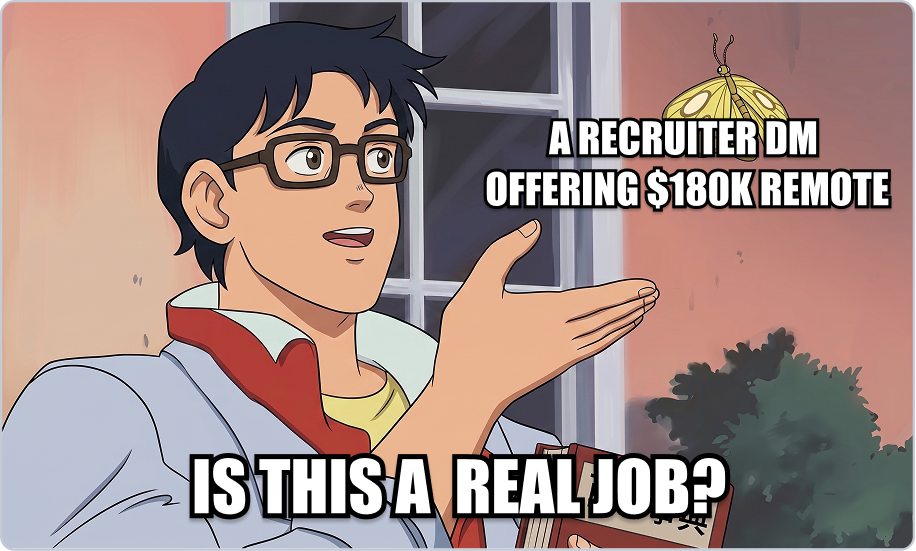
Meanwhile, our users keep writing in with the opposite problem. A recruiter DMs them with a role that looks perfect, and they can’t tell if the person on the other end is real.
Same problem, both sides. Let me talk about it.
The checklist you learned is basically useless in AI hiring
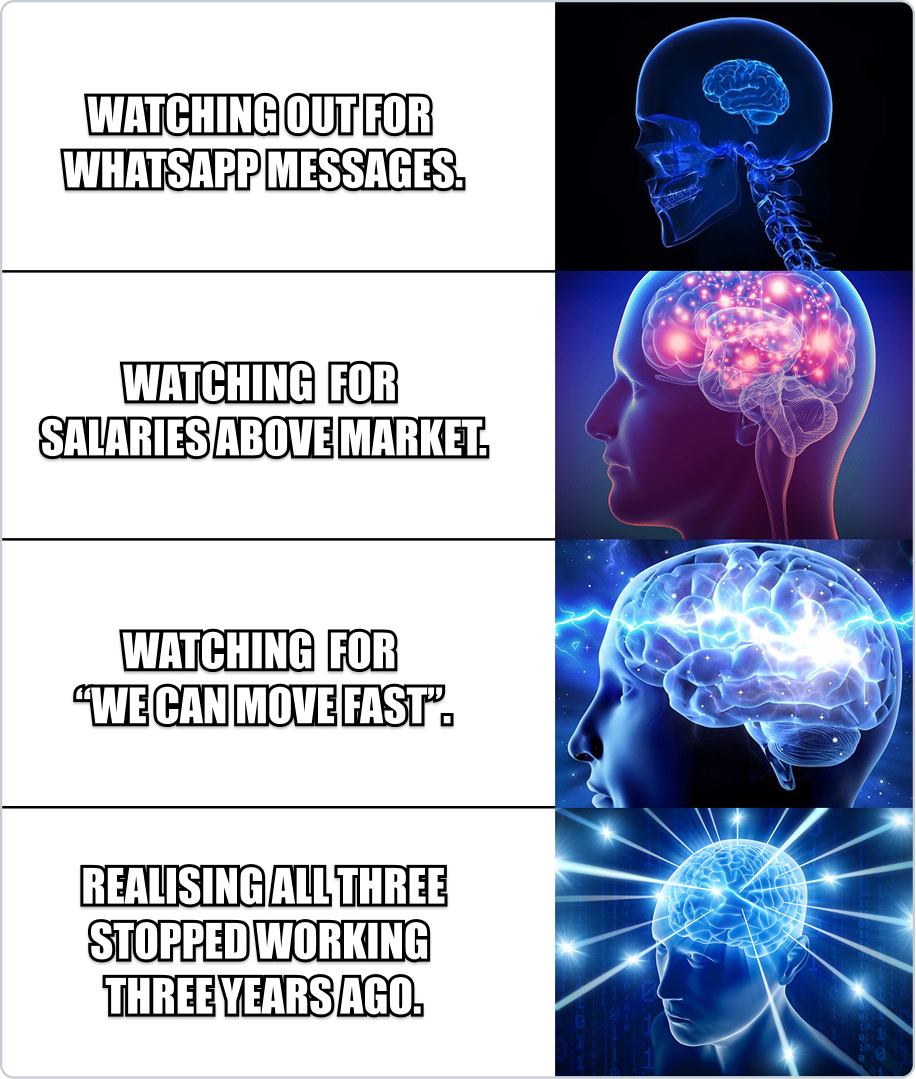
Every job scam article you’ve ever read gave you the same five red flags. WhatsApp messages. High salaries. Speed. Pay-to-play. Manufactured urgency.
Here’s the honest problem. In AI hiring, we do most of that ourselves.
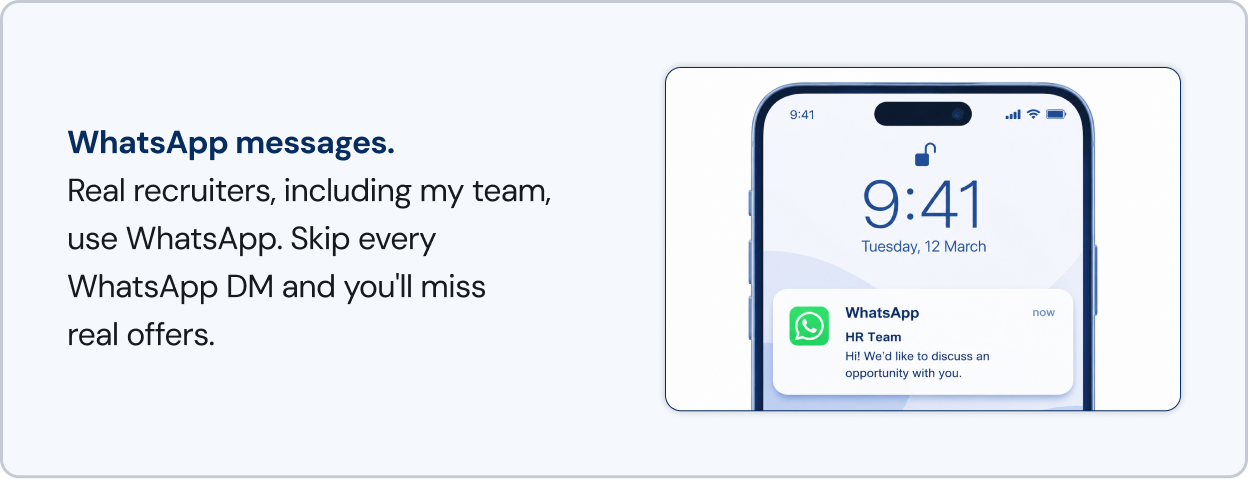
At Careerflow we message candidates on WhatsApp because that’s where the fastest replies happen. We overpay for specialist data-labeling roles because they’re short-term contract gigs and the market rate is genuinely high. We can hire someone inside 24 hours with an AI interview and assessment, no traditional loop needed. If you applied our own advice to us, we’d fail three out of five checks.
We’re not the exception. This is what hiring at AI-native companies looks like in 2026. So if you’re using the old checklist as your first filter, you’re throwing out real opportunities and keeping the fakes anyway.
Let me walk through what’s actually still useful and what isn’t.
The ones that still work
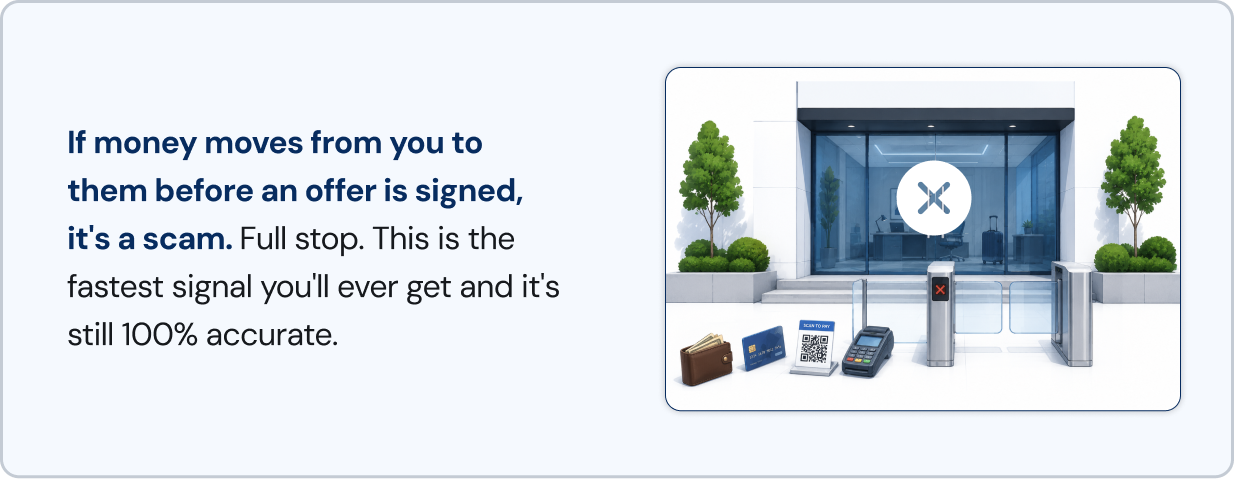
Pay-to-play. This is the one that has never changed. Real employers do not ask you for money. Not for equipment. Not for training. Not for background checks. Not for "onboarding software." Ever.
Manufactured urgency without a real reason. Note the second half of that sentence. AI companies can move fast because their process is fast, and that's fine. What isn't fine is "decide in 24 hours or the offer is gone" for a role you didn't apply to, from a company you've never spoken to. Real urgency comes from a real hiring loop. Fake urgency comes from wanting to stop you thinking.
The ones that don’t tell you much anymore
High salaries. A senior engineer at Anthropic has a median total comp of $563,325. At Cursor, the median is $810,000. Data labeling specialists on short contracts can earn multiples of what a full-time role pays. The number in the DM tells you almost nothing on its own.
Speed. Every well-run startup moves fast. AI companies especially. Speed is normal.
One more thing worth knowing about modern recruiting
A lot of hiring today runs through third parties. Agencies. Staffing firms. Contract recruiters hiring on behalf of the actual company. Which means an email from @randomagency.com instead of @company.com is not a scam signal by itself. It’s just how the industry works now, especially for contract, specialist, and short-term roles.
If a recruiter’s email domain doesn’t match the company they’re hiring for, don’t panic. Verify the agency itself instead. Real website, real client list, LinkedIn page with real employees. If all of that checks out, the domain mismatch is normal.
So if the old checklist doesn’t work, what does?
The checks that actually catch fakes now
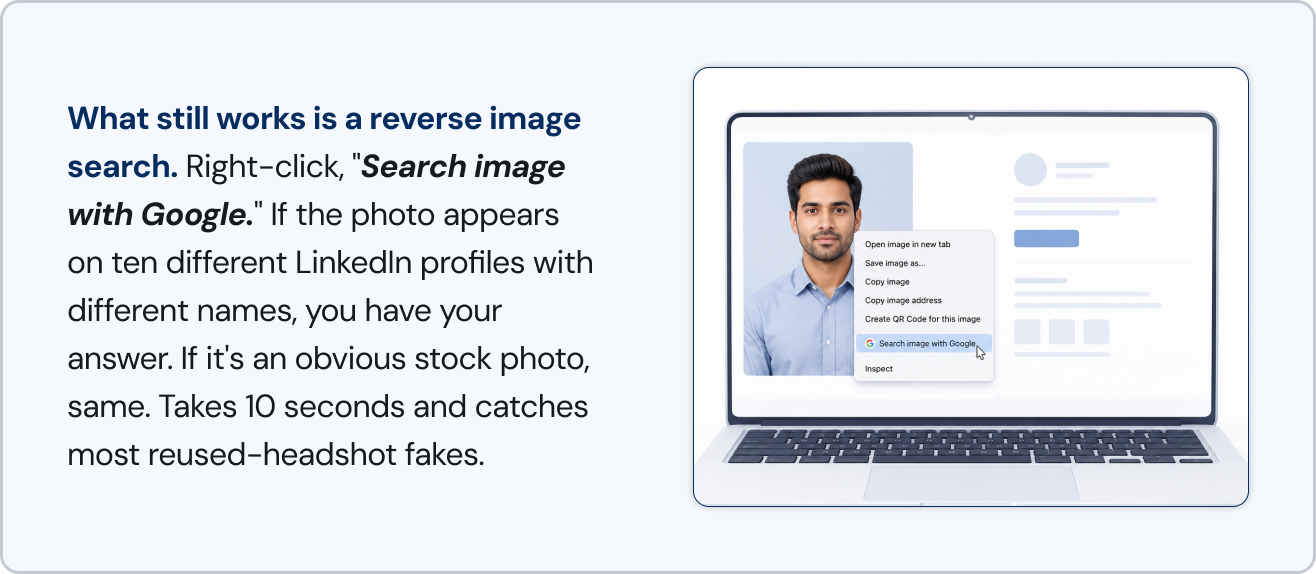
Reverse image search the profile photo.
Don’t try to spot an AI-generated face by looking at it. That’s a losing game. The models have gotten good enough that most people, most of the time, can’t tell.
Check the profile age.
Click “Contact Info” on their LinkedIn profile. Real senior recruiters have profiles going back 5 to 10 years. A profile created in the last 6 months, with a senior title and 500 connections, is almost always fake. Scammers churn accounts because LinkedIn keeps banning them.
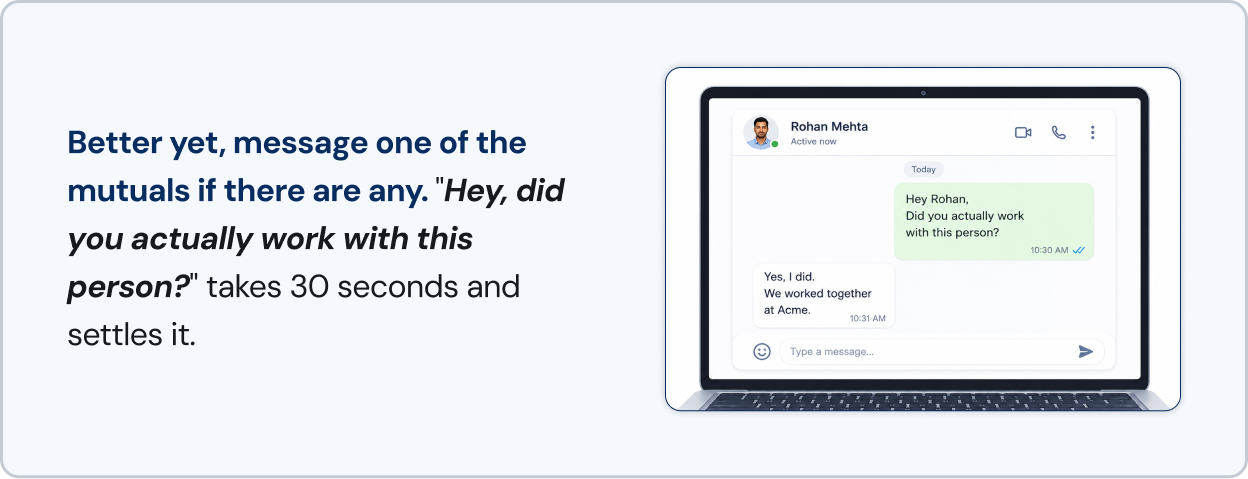
Check mutual connections.
A real recruiter at a real company in your industry will have shared connections with you. Colleagues, former coworkers, people you’ve worked with. Someone with 500 connections and zero mutuals in your field, especially at senior levels, is a fabrication.
Google their name with the company name.
Real recruiters usually leave some trail. Old tweets, a Medium post, a conference bio, a podcast mention, colleagues tagging them. Junior recruiters have thinner footprints, so this is a signal, not proof. What you’re looking for is any evidence they exist outside a single LinkedIn profile. Zero footprint at senior levels is more suspicious than at junior ones.
Ask for a company or agency email, and request a video call with camera on.
This is the single strongest test, because fakes can build a photo, a profile, and a LinkedIn history that looks real, but they can’t sustain a live video call from a real work address. Most real recruiters will do both within a day. If they can’t do either, or keep rescheduling video calls specifically, or push everything to chat, take that seriously.
Check the company careers page for the role.
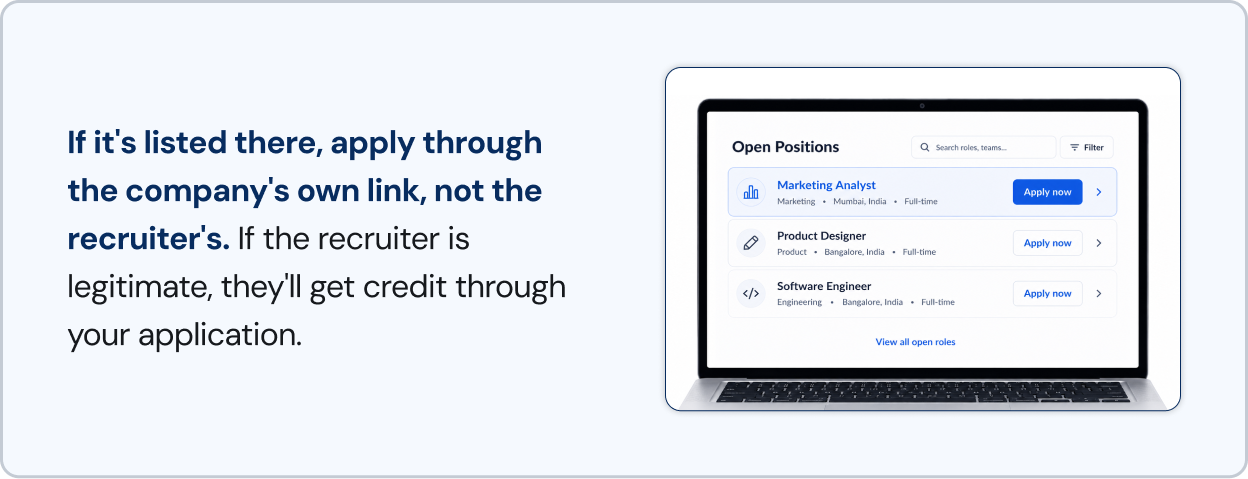
If it's not on the careers page and the recruiter is from an agency, that's normal (see above). If they're supposedly a direct company recruiter and the role isn't listed anywhere, ask them for it. A real one will send you the internal link inside minutes. A fake one will make excuses.
Your this-week move
Open your LinkedIn DMs, WhatsApp, and email. Look at your last 10 recruiter contacts.
Run each one through the checks. Think of it as a scoring system, not a pass/fail test. A single failed check might mean nothing on its own. A real junior recruiter with a new-ish profile and thin online history is a real thing. Two failed checks is worth pausing on. Three or more, and you’ve almost certainly got a fake.
I’d bet a coffee that at least one or two of those 10 contacts trip multiple checks. If that’s the case, you now know what fake looks like in your own inbox, which is a more useful education than reading another generic list.
Then log every real recruiter into a system so you’re not doing this from scratch every time. Not the Job Tracker, which is for applications. The Networking Tracker, which is built for people.
Step 1 — Save every real recruiter to Careerflow’s Networking Tracker by importing them from LinkedIn or adding manually.
Step 2 — Use tags to categorize by company, source (LinkedIn, WhatsApp, cold email), and industry. Set a follow-up reminder for anyone you want to stay in touch with.
Step 3 — Log every conversation in the notes. When they reach back out six months later with a new role, you’ll remember exactly what you talked about and can respond like you never left.
One last thing
Jamie Kohn from Gartner’s HR practice put it plainly last July:
“It’s getting harder for employers to evaluate candidates’ true abilities, and in some cases, their identities.”
That quote was written about employers. It describes exactly what my team deals with when we open the applicant pile every week.
Now read it backwards, from where you’re standing. It’s getting harder for candidates to evaluate whether the employer reaching out is real, or whether the role even exists, or whether the person on the call is a person.
Both sides have lost the ability to see clearly, for the same reason. The tools that made fraud cheap also broke honest hiring.
You can’t fix that market. What you can do is skip the outdated checklist, run the checks that still work, and log every real recruiter somewhere you’ll actually find them again.
Pay-to-play is the one signal that instantly means scam. Every other check is a matter of pattern, not proof.
A handful of roles are open at Careerflow right now. If one fits, apply below. If it fits someone you know better, send this their way.
See you next week.
Puneet
P.S. Forward this to someone who's been getting DMs and can't tell what's real. Right now it's costing them time. Next round it'll cost them more.