

land an interview?
The job market has become a gladiator arena where recruiters expect “initiatives.”

Landing an interview in May? Just 5 steps away
The job market has become a gladiator arena where recruiters expect “initiatives.”
Human civilization truly peaked when job hunting became performance art for algorithms.
Meanwhile, AI quietly changed the rules.
Not in the “replace humans” way people scream about online between crypto hype and productivity threads. In the practical way.
The useful way.
The way that lets one person do the work of five if they know how to use the tools properly.
Getting interviews is no longer just about qualifications.
A person needs to account for visibility, positioning, timing, and speed.
The candidates getting callbacks are usually the ones who tailor resumes faster, apply smarter, and stand out before recruiters lose interest.

Now, using AI doesn’t mean pasting your life story into ChatGPT and hitting generate.
Recruiters can now detect direct copy-paste AI applications in 2026 faster than a typo.
Here are the 5 steps to land an interview using AI:
Step 1: Fix Your Resume
Most companies use ATS (Applicant Tracking Software) to sort resumes and organise and rank them.
Makes the life of recruiters easier.
Some ATS systems filter resumes automatically.
But if your resume is hard for the system to read, it is filed away or misunderstood before a human even sees it.
This doesn’t mean you’re underqualified. The ATS system is programmed to screen through fancy resumes, which are often viewed as a distraction.
The ATS rules are simple:

Now your bullets.
Every pointer needs to consist of three things:
what you did
how you did it,
what happened because of it.
If you have numbers and data on how your work made a difference, you get brownie points.
Good Example: Grew LinkedIn 400 → 9K in 6 months by posting weekly carousels + running 3-month content experiments
Bad example: Managed social media accounts
Run your resume through Careerflow’s Resume Optimizer before you apply to anything this week.
Paste the JD.
It shows you keywords the ATS is scanning for that your resume is missing, apart from your match score, and which bullets are doing nothing.
Step 2: Fix Your LinkedIn, It's Your Second Resume
According to research conducted in 2025, 87% of recruiters use LinkedIn to vet candidates. Your LinkedIn profile is your second resume, which is a part of the hiring process.
Most people’s headlines right now look like this:
“Recent Graduate | Aspiring Marketing Professional | Open to Opportunities 🚀”
To a recruiter searching by keyword, this profile simply doesn’t show up.
“Aspiring” is not a searchable skill.
“Open to Opportunities” is not a job title
Beyond the headline, your About section needs a hook in line one (not “I am a passionate professional with 4 years of experience”)
Your Featured section should have something actually clickable - a project, an article, a portfolio link.
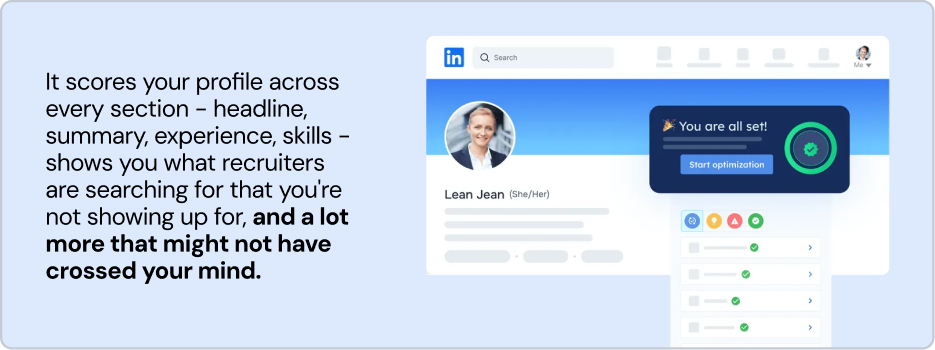
Run your profile through Careerflow’s LinkedIn Optimizer.
Step 3: Start a Conversation First
Cold outreach has a bad reputation because most people do it badly.
“Hi [Name]! I came across your profile, and I’m so inspired by your journey. I’d love to connect and maybe pick your brain over a virtual coffee sometime!”
Delete. Delete. Delete.
Every hiring manager in America would delete that message before they finish reading this sentence.
They get hundreds of them a week from people who googled “how to message a recruiter” at midnight and copy-pasted the first result.
Before you type a single word.
Use Careerflow’s AI Email Writer.
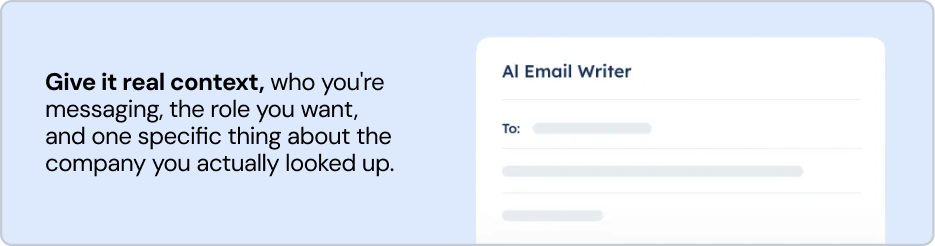
Not “I love your mission and values.” Something real, maybe a product they just launched, a market they just entered, a problem their CEO complained about publicly last week.
You edit it, make it sound like you, and send it. Takes 3 minutes per message instead of 20.
Where to find these people?
Go to LinkedIn.
1. Search for “I’m hiring”, “looking for a”, “open role on my team.”
2. Search for “DM me”, “send me your resume,” “drop your portfolio.”
3. Search for “growing the team”, “excited to announce”, “just opened a req.”
A direct message to a hiring manager is 10x more effective than an Easy Apply.
Step 4: You Prepared Your Speech. You Never Practiced to Say It Out Loud.
This is the step everyone skips and then regrets in real time, on camera, in front of a stranger.
You spend time preparing the content.
But the moment the interview starts and they say, “Tell me about yourself,” your brain suddenly forgets your entire career history.
You use fillers like “um” and “uh” six to seven times in one sentence. And the recruiter has already rejected your application the moment he hears “I guess.”
It happens to even smart, qualified, genuinely impressive people constantly.
Candidates who practice through structured mock interviews are fluent and perform better.
Careerflow’s AI Mock Interview gives you questions built around your specific target role.
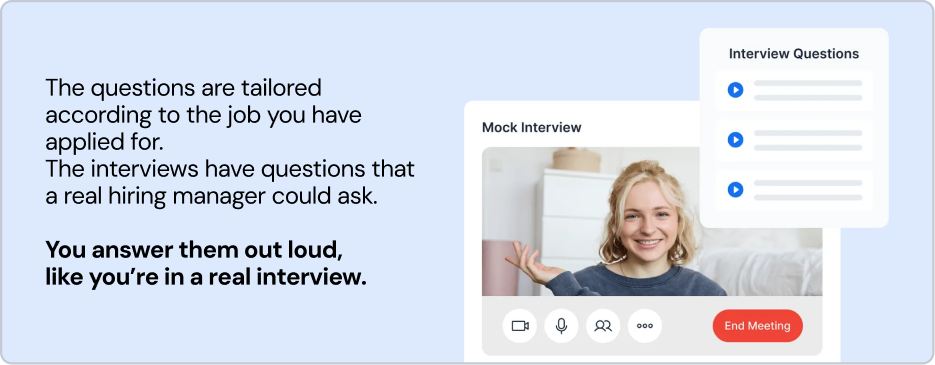
Then it tells you:
• if your answer was clear
• if it was structured properly
• and if it actually made sense… or just kind of went nowhere
Do it three times before any interview.
And if you caught last week’s edition, this is exactly how you practice your “Why should we hire you?”
Step 5: Track Everything
Applying for jobs without tracking your applications is like sailing in Point Nemo.
You send out X number of applications over two weeks. You hear back from Y.
But you can’t recall which companies you applied for.
You replied to the wrong job title.
You lost track of the number of follow-ups.
This gives the hirers the impression that you aren’t serious. They move on to the next candidate.
Your disorganized application method just cost you your dream company.
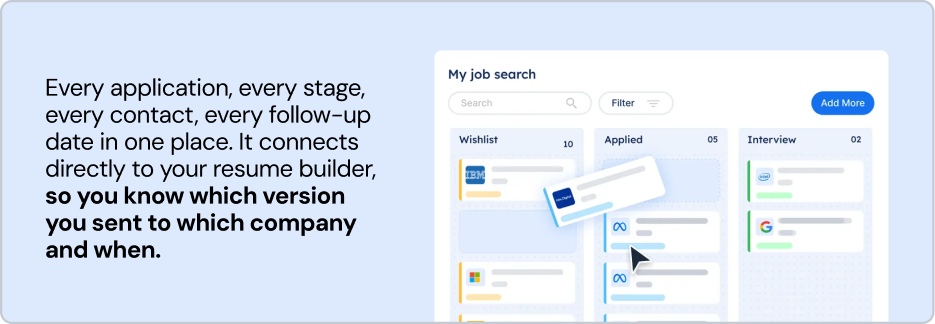
Careerflow’s Job Tracker has a Kanban board for your entire search.
Be the organized person. It costs nothing except 5 minutes of setup.
There are a few job openings at Careerflow (linked below), and if you’re suited or know someone who is, feel free to send them our way:
See you next week.
Puneet
P.S. Forward this to someone who’s been “about to start applying” for three weeks. They need this more than they know.