


The problem isn’t using AI. It’s relying on it.
You shipped a small app this weekend. Cursor wrote most of it. It works, it’s live, it’s sitting on your GitHub looking good.
And here’s the thought you haven’t said out loud to anyone: if someone sat you down and asked you to explain, line by line, why it actually works, you’re not sure you could.
I read junior engineer applications at Careerflow all day, so let me tell you what that quiet worry really is.
It isn’t the thing that disqualifies you. It’s turning into the whole job.
How the ladder went missing
Here's how we got here, quickly. In early 2025, Andrej Karpathy gave it a name: vibe coding.

You describe what you want, you accept whatever the model hands back, and you forget the code even exists.
Within a year the tools got so good that shipping something stopped being the hard part at all.
Which sounds like wonderful news for someone just starting out.
Until you notice who stopped getting hired.
Since ChatGPT launched, employment for developers aged 22 to 25 has fallen by nearly 20%, even as demand for more experienced engineers held up.
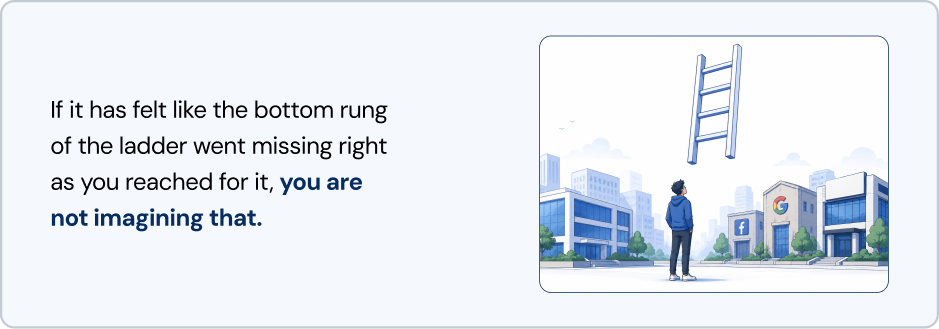
But the panic gets the reason backwards, and this is the part I really want you to sit with.
What the older engineers were actually being paid for
The older engineers aren’t safe because they type faster. They’re safe because their job was never really about typing.
Simon Willison put the cleanest name on it last year.
The throwaway version, where you accept whatever the model produces, is vibe coding.
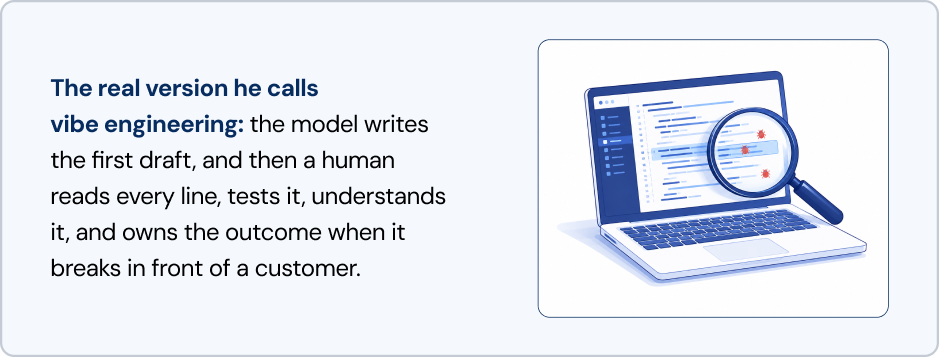
That second job, the reading and the owning, is what a senior engineer has quietly been paid for the entire time.
It used to sit locked behind five years of boilerplate before anyone let you near it.
That lock is gone now.
So the thing you were privately worried about, that you can’t yet explain why your code works, isn’t you falling behind everyone else.
It’s the one skill nobody has figured out how to hire for yet, sitting wide open, available to you on day one.
What the interview actually looks like now
Here's what the interview that ends in an offer now actually looks like. Someone slides an AI written pull request across the table at you. It's clean, it's plausible, it looks ready to merge, and they ask what you'd change.
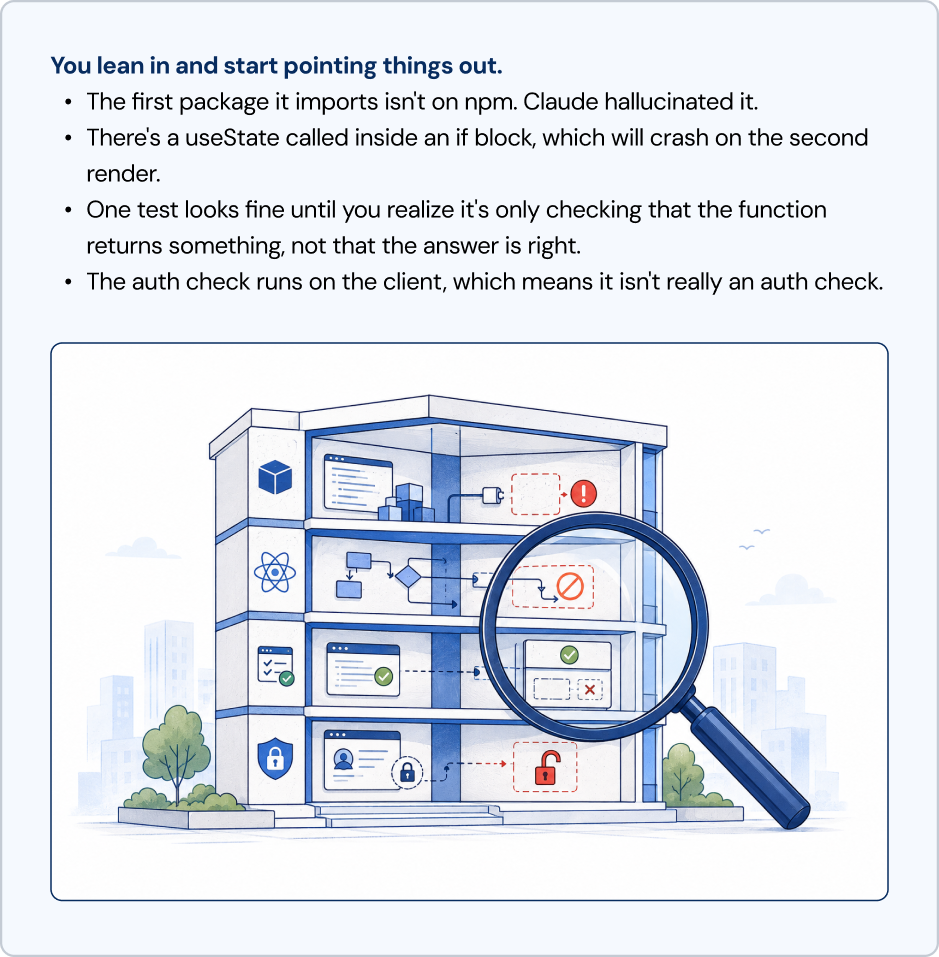
Most candidates freeze at that question. Whoever doesn’t gets the offer.
The one thing you don’t want is to be figuring this out live for the first time in front of a hiring manager.
Careerflow's AI Mock Interview will run you through role specific interview questions with realistic follow ups and give you feedback on each answer, so the muscle for "here's what I'd change and why" is warm before the real conversation. Fifteen minutes of rehearsal covers most of the panic.
So that's who to become, and the good news is it costs you almost nothing to start.
Your weekend build
Three steps. Do them in this order.
Step 1: Ship one small thing. Pick something you’d actually use. A recipe search across your five favorite food blogs. A budget tracker that pulls from your bank export. A tool that scrapes a Substack you like and emails you the top post. Build it in Cursor or Claude Code and get it deployed to Vercel or Fly by Sunday evening. The app barely matters. What matters is that you shipped it end to end.
Step 2: Catch, and log every catch. As you build, keep a running note of every mistake the AI made and how you spotted it. Screenshot the diff. Save the prompt that produced it. Write down the version you ended up shipping. Every AI written pull request is a free rep at the exact skill that’s now worth money, and by Sunday night you should have four or five of them written down.
Step 3: Pick the best catch and post it Monday morning. Two or three paragraphs is plenty. Screenshot the diff. Show the prompt you used, the version the AI produced, and the version you shipped. Frame it as “here’s the bug Claude kept trying to sneak in, and here’s exactly how I spotted it.” This one post tells a hiring manager far more about you than another page of shipped features ever will, because it shows the reviewing and not just the building.
If the blank page is the hard part, Careerflow's LinkedIn Post Generator will turn your rough notes into something that reads like an engineer thinking out loud instead of a resume update.
One last thing
Simon Willison, the same engineer who named all of this, wrote a line last year that I keep near my desk:
“Vibe coding is irresponsibly building software through dice rolls, not caring what code is produced. What about when engineers at the top of their game use AI tools responsibly to accelerate their work?”
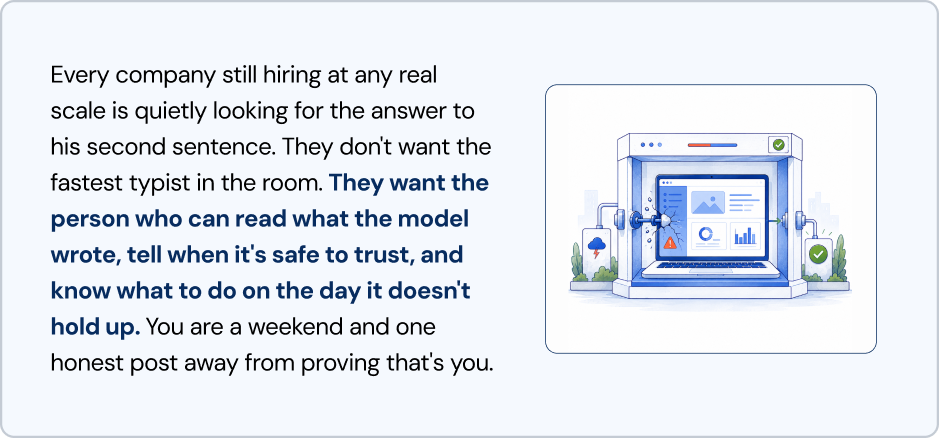
We've got a handful of roles open at Careerflow right now. If one fits you, apply below. If it fits someone you know better than it fits you, please send this their way.
See you next week.
Puneet
P.S. Forward this to someone who just built their first AI project and isn’t sure what to do with it. Tell them to post the bug they caught, not the code they shipped. That’s the part employers are actually reading for.